
Understanding the difference between since and for is an important part of learning English grammar. These two words are commonly used when talking about time, experiences, and activities that continue from the past to the present. However, many English learners get confused about when to use since and when to use for. The good news is that the rule is simple once you understand the difference.
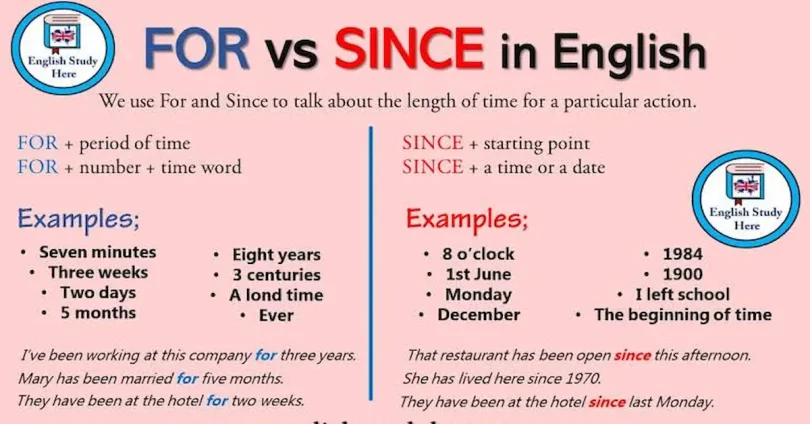
We use since to describe the starting point of an action or situation. For example, “I have lived here since 2020” tells us when the person started living there. On the other hand, we use for to describe how long an action or situation has continued. For example, “I have lived here for six years” tells us the duration of time.
Learning since vs for with examples can help you improve your grammar, write correct sentences, and communicate more confidently in English. These words are often used with the present perfect tense and the present perfect continuous tense, especially when describing activities that started in the past and continue into the present.
In this article, we will explain the difference between since and for in simple English. You will learn their meanings, grammar rules, sentence structures, and common uses. We will also provide practical examples, explain common mistakes, and include exercises with answers so you can practice using since and for correctly in everyday conversations.
What Is the Difference Between Since and For?
The main difference between since and for is how they describe time. We use “since” to show when an action or situation started, while we use “for” to explain how long it has continued. Both words are commonly used with perfect tenses, especially when talking about actions that began in the past and continue in the present. since vs for with examples
For example, “I have worked here since 2022” tells us the starting point of the job. In contrast, “I have worked here for four years” tells us the length of time the person has worked there.
Let’s understand each word in more detail.
Meaning of Since
The word since refers to a specific starting point in time. It tells us when an action or situation began. We often use it with a date, year, day, time, or event.
Examples of since in sentences:
- I have lived here since 2020.
- She has been studying since morning.
- He has worked at this company since January.
- We have known each other since childhood.
- They have been waiting since 9 a.m.
- It has been raining since Monday. since vs for with examples
- My brother has played cricket since he was ten.
In these examples, since identifies the point when the activity or situation started. The action may still be continuing now.
Remember this simple rule: Since = starting point.
Meaning of For
The word for describes a period or duration of time. It tells us how long an action or situation has continued. We can use it with minutes, hours, days, weeks, months, and years.
Examples of for in sentences:
- I have lived here for six years. since vs for with examples
- She has been studying for two hours.
- He has worked at this company for three months.
- We have known each other for ten years.
- They have been waiting for thirty minutes.
- It has been raining for two days.
- My brother has played cricket for five years.
In these examples, for tells us the length of time an activity or situation has continued.
Remember this simple rule: For = duration of time.
Since vs For: Quick Comparison
The easiest way to understand since vs for is to compare sentences that describe the same situation. since vs for with examples
For example, you can say, “I have studied English since 2022” or “I have studied English for four years,” assuming the time period matches your situation.
Both sentences can be correct, but they provide different information. Since tells the reader when something began, while for tells the reader how long it has lasted.
Once you remember this distinction, choosing between since and for becomes much easier. Whenever you write a sentence about time, ask yourself whether you need to mention a starting point or a duration. That simple question will help you select the correct word. since vs for with examples
you may also like it;
Descriptive Words for Creative Writing With Examples
English Synonyms and Antonyms List for Students
Advanced Vocabulary Words for Students With Examples
Common English Verbs With Examples for Beginners
Since vs For Grammar Rules

Understanding the grammar rules for since and for will help you use these words correctly in everyday English. Although both words are related to time, they are not interchangeable in every sentence. The main rule is to use since for a starting point and for for a period of time.
Let’s explore the most important rules with simple explanations and examples.
When to Use Since
Use since when you want to mention the exact point when an action or situation started. This starting point can be a date, a year, a day, a clock time, or an event in the past. since vs for with examples
Since is especially common with the present perfect and present perfect continuous tenses.
Examples:
- I have lived in this city since 2019.
- She has worked here since Monday.
- We have been friends since childhood.
- He has been sleeping since 10 p.m. since vs for with examples
- They have been learning English since January.
- My father has owned this shop since 2015.
- I have felt better since yesterday.
In each sentence, since tells us when the situation began. For example, “since 2019” gives a starting year, while “since childhood” identifies a period of life when the friendship began.
You can also use since before a clause that describes a past event.
Examples:
- I have been happier since I changed my job. since vs for with examples
- She has improved her English since she joined the course.
- We have not met since we left school.
Here, since introduces an event or situation that marks the starting point.
When to Use For
Use for when you want to describe the length of time an activity or situation has continued. Unlike since, for does not identify the exact starting point. Instead, it tells us the duration. since vs for with examples
We often use for with minutes, hours, days, weeks, months, and years.
Examples:
- I have waited for twenty minutes.
- She has worked here for three years.
- We have lived in this house for six months.
- He has been studying for two hours.
- They have been traveling for a week. since vs for with examples
- My brother has played football for five years.
- It has been raining for several days.
In these sentences, for explains how long the activity or situation has lasted. For example, “for two hours” describes a duration, but it does not tell us the exact time the studying began.
You can also use for with negative sentences and questions.
Examples:
- I have not seen him for a long time. since vs for with examples
- She has not visited us for several months.
- How long have you lived here for?
In everyday English, the last question is also commonly expressed as “How long have you lived here?” without for at the end.
Since and For With the Present Perfect Tense
The present perfect tense is often used with since and for to describe situations that started in the past and continue into the present, or past actions that have a connection to the present.
Sentence structure:
Subject + has/have + past participle + since/for + time expression since vs for with examples
Use has with he, she, it, and singular nouns. Use have with I, you, we, they, and plural nouns.
Examples with since:
- I have lived here since 2020.
- She has known him since school.
- They have worked together since January.
Examples with for:
- I have lived here for six years.
- She has known him for ten years. since vs for with examples
- They have worked together for several months.
The examples show how since identifies the starting point and for describes the duration.
Since and For With the Present Perfect Continuous Tense
We also use since and for with the present perfect continuous tense to emphasize an activity that began in the past and has continued up to now, or has only recently stopped.
Sentence structure:
Subject + has/have + been + verb-ing + since/for + time expression
Examples with since:
- I have been reading since morning.
- He has been working since 8 a.m. since vs for with examples
- We have been waiting since noon.
Examples with for:
- I have been reading for two hours.
- He has been working for eight hours. since vs for with examples
- We have been waiting for thirty minutes.
These sentences emphasize the duration of an ongoing or recently completed activity. When you want to explain when the activity started, use since. When you want to explain how long it has continued, use for.
Learning these rules and practicing them with your own examples will make it easier to use since and for accurately in both speaking and writing. since vs for with examples
Since vs For With Examples
Learning grammar rules becomes easier when you see how they work in real sentences. Since and for are commonly used when talking about daily routines, work, education, relationships, and personal experiences. The important thing is to identify whether you are describing a starting point or a period of time. since vs for with examples
Let’s look at different examples to understand how to use these words correctly.
Examples of Since in Sentences
We use since to mention when an activity or situation began. The starting point can be a specific date, year, day, time, or past event.
Here are some simple examples:
- I have lived in this city since 2021.
- She has worked at this school since September.
- He has been learning English since last year.
- We have been friends since childhood.
- They have been waiting since 7 a.m.
- My mother has been busy since morning. since vs for with examples
- Ali has played cricket since he was a child.
- It has been cold since Monday.
- I have known her since college. since vs for with examples
- The shop has been closed since yesterday.
- My brother has owned this car since 2023.
- We have not visited that restaurant since last month.
- She has felt tired since the journey.
- They have been living together since 2020.
- I have been interested in reading since school.
In these examples, the word since identifies the starting point of an activity or situation. For instance, “since 2021” tells us when the person started living in the city.
Examples of For in Sentences
We use for to describe how long an activity or situation has lasted. It is followed by a duration, such as two hours, three days, several months, or many years.
Here are some useful examples:
- I have lived in this city for five years.
- She has worked at this school for six months.
- He has been learning English for one year.
- We have been friends for ten years. since vs for with examples
- They have been waiting for thirty minutes.
- My mother has been busy for several hours.
- Ali has played cricket for many years.
- It has been cold for three days.
- I have known her for eight years.
- The shop has been closed for two days.
- My brother has owned this car for three years.
- We have not visited that restaurant for a long time. since vs for with examples
- She has felt tired for several hours.
- They have been living together for four years.
- I have been interested in reading for a long time.
Each example tells us the duration of an activity or situation rather than the exact time it began.
Since vs For Examples in Daily Life
You can use since and for in everyday conversations with friends, family members, classmates, and coworkers. Understanding these examples will help you speak more naturally and confidently.
Examples using since:
- I have been awake since 6 a.m.
- My father has worked here since 2018.
- We have been studying since the morning.
- She has been at home since yesterday.
- I have used this phone since January. since vs for with examples
Examples using for:
- I have been awake for three hours.
- My father has worked here for eight years.
- We have been studying for two hours.
- She has been at home for one day. since vs for with examples
- I have used this phone for several months.
Notice how the sentences describe similar situations in different ways. The sentences with since identify a starting point, while the sentences with for describe a length of time.
Since vs For Examples With Questions
Since and for can also be used when asking questions about time. These questions are helpful when you want to know when something began or how long it has continued.
Questions with since:
- Since when have you lived here?
- Since when has she worked at this company?
- Since when have they been waiting?
- Since when has he known you? since vs for with examples
- Since when have you been learning English?
These questions ask about a starting point. In everyday English, “How long have you lived here?” is often more natural when asking about duration.
Questions with for:
- How long have you lived here?
- How long has she worked at this company?
- How long have they been waiting?
- How long has he known you? since vs for with examples
- How long have you been learning English?
You can answer these questions using a duration.
For example:
Question: How long have you lived here?
Answer: I have lived here for five years.
Question: Since when have you worked here?
Answer: I have worked here since 2022. since vs for with examples
Negative Sentences Using Since and For
Negative sentences explain that something has not happened or a situation has not changed during a period of time. Since and for are often used in these sentences with the present perfect tense. since vs for with examples
Examples with since:
- I have not seen him since Monday.
- She has not called me since yesterday.
- We have not visited our village since last year.
- He has not played football since his injury. since vs for with examples
- They have not spoken to each other since the meeting.
Examples with for:
- I have not seen him for two weeks.
- She has not called me for several days.
- We have not visited our village for a year. since vs for with examples
- He has not played football for three months.
- They have not spoken to each other for a long time.
These examples show how both words can be used in negative sentences. Choose since when you want to identify the starting point of the period, and choose for when you want to describe its duration.
What is the main difference between since and for?
Since refers to a specific starting point in time, while for describes a duration. For example, “I have lived here since 2020” identifies the starting year, whereas “I have lived here for six years” describes the duration.
When should I use since in a sentence?
Use since when you want to mention when an action or situation started. It can be followed by a year, date, day, clock time, or past event. For example, “She has worked here since January.”
When should I use for in a sentence?
Use for when you want to explain how long an activity or situation has continued. It is followed by a duration, such as two hours, three days, or five years. For example, “I have studied English for two years.”
conclusion
Understanding since vs for with examples can make English grammar much easier. Both words help us talk about time, but they serve different purposes. Use since when you want to mention the starting point of an action or situation, and use for when you want to describe how long it has continued. since vs for with examples
For example, “I have lived here since 2020” tells us when the person started living there, while “I have lived here for six years” tells us the duration. These words are especially useful with the present perfect and present perfect continuous tenses.
The best way to master this grammar rule is to practice writing your own sentences. Try using since with dates, years, and starting events, and use for with minutes, hours, days, and years. With regular practice, you will be able to use both words correctly in everyday conversations and written English. since vs for with examples