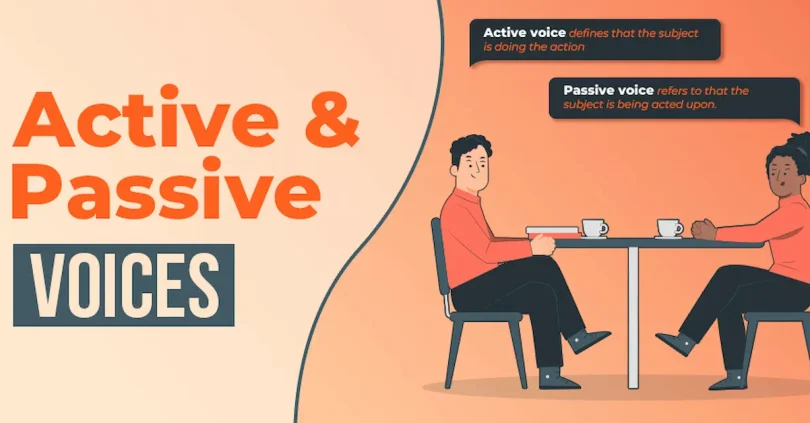

Learning English grammar becomes easier when you understand how sentences are formed. One important topic is active and passive voice, which helps you express ideas clearly in speaking and writing. Whether you are a student preparing for an exam, a beginner learning English, or someone who wants to improve writing skills, understanding these two types of voice can make a big difference.
In English, active voice is used when the subject performs an action, while passive voice is used when the subject receives the action. For example, “The teacher explains the lesson” is an active voice sentence. If we change it to passive voice, it becomes “The lesson is explained by the teacher.” Both sentences communicate a similar idea, but they focus on different parts of the action.
Active and passive voice are commonly used in school assignments, essays, conversations, news reports, formal writing, and professional communication. Active voice often makes sentences direct and easy to understand. Passive voice is useful when the action or the result is more important than the person performing it, or when the person is unknown.
In this article, we will explore active and passive voice examples with simple explanations and practical sentences. You will learn the difference between active and passive voice, understand the basic grammar rules, and see how to change sentences from one form to the other. We will also cover examples from different tenses, common mistakes, and practice exercises to help you improve your English grammar with confidence.
you may also like it;
Descriptive Words for Creative Writing With Examples
English Synonyms and Antonyms List for Students
Advanced Vocabulary Words for Students With Examples
Common English Verbs With Examples for Beginners
What Is Active Voice?
Active voice is a sentence structure in which the subject performs the action. It is one of the most common ways to write and speak in English because it makes sentences clear, direct, and easy to understand.
In an active voice sentence, the subject usually comes first, followed by the verb and the object. For example, in the sentence “Ali kicks the ball,” Ali is the subject, kicks is the verb, and the ball is the object. Ali performs the action, so the sentence is written in active voice.
Active voice is useful in everyday conversations, school assignments, emails, stories, and professional writing. It helps readers quickly understand who is doing something and what action is taking place.
Definition of Active Voice
Active voice is a grammatical structure in which the subject performs the action expressed by the verb.
The basic structure of an active voice sentence is:
Subject + Verb + Object
Here are a few examples:
- Sara reads a book.
- The boy plays football.
- My mother cooks dinner.
- The teacher explains the lesson.
- The workers clean the office.
- The cat catches a mouse.
- Ahmed writes a letter.
- The students complete their homework.
In each sentence, the subject performs the action. Sara reads, the boy plays, the teacher explains, and the students complete their homework. This is why all these sentences are in active voice.
Remember that not every active voice sentence needs an object. For example, “The baby sleeps” is also active voice because the subject, the baby, performs the action of sleeping.
Active Voice Examples in Simple Sentences
The easiest way to understand active voice is to look at examples from everyday life. These sentences show how people, animals, and things perform actions.
Everyday examples:
- I drink water.
- She opens the door.
- He drives a car.
- We watch television.
- They play cricket.
- The dog barks loudly.
- My father reads the newspaper.
- The children draw pictures.
- The chef prepares food.
- The gardener waters the plants.
Examples from school:
- The teacher teaches English.
- The students solve the questions.
- Ali completes his assignment.
- The principal announces the results.
- The class monitor collects the notebooks.
Examples from work:
- The manager leads the team.
- The employee sends an email.
- The company produces furniture.
- The accountant checks the bills.
- The team finishes the project.
These examples show that active voice keeps the subject and its action easy to identify. It is usually a good choice when you want your writing to sound natural, confident, and straightforward.
For example, “The team completed the project” is more direct than “The project was completed by the team.” Both sentences are correct, but the active version puts the focus on the team and its action.
Easy tip: To identify active voice, ask yourself, “Who is performing the action?” If the subject is doing the action expressed by the verb, the sentence is generally in active voice.
Difference Between Active and Passive Voice
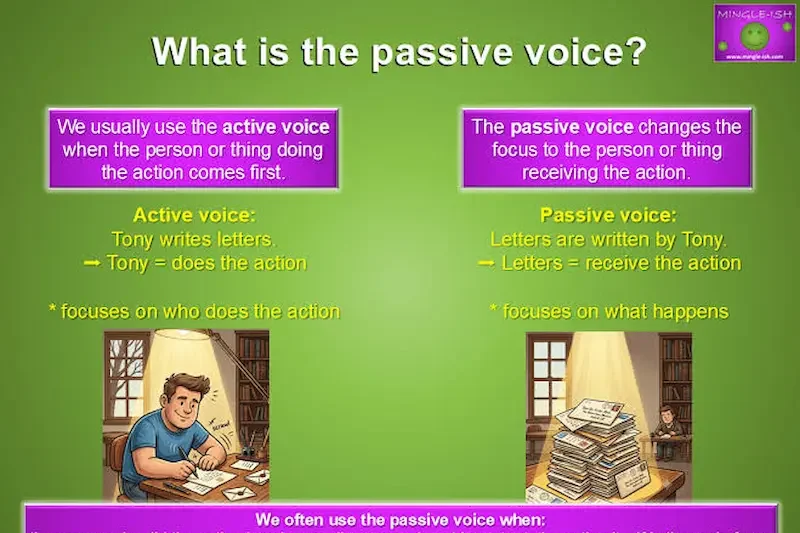
Active and passive voice are two ways to express an action in English. Both can communicate the same basic information, but they place emphasis on different parts of a sentence. Understanding this difference will help you write clearer sentences and use the correct voice for different situations.
In active voice, the subject performs the action. In passive voice, the subject receives the action. For example, “The chef prepares the meal” is active voice, while “The meal is prepared by the chef” is passive voice.
Both sentences are grammatically correct, but the first focuses on the chef, whereas the second focuses on the meal.
Active Voice vs Passive Voice: Quick Comparison
The following table explains the main differences between active and passive voice.
One important point is that passive voice does not always require a “by” phrase. For example, “The window was broken” is a complete passive sentence when the person responsible is unknown or irrelevant.
Active voice is generally useful when you want to explain who did something. Passive voice is useful when the action, result, or affected person or thing deserves more attention.
How to Identify Active and Passive Voice
You can identify active and passive voice by examining the subject, the verb, and the meaning of the sentence.
Identify active voice
Ask yourself: Is the subject performing the action?
For example:
- The girl paints a picture.
- The dog chased the cat.
- The workers repaired the road.
- Ahmed will complete the assignment.
These are active voice sentences because the subject performs the action described by the verb.
Identify passive voice
Look for a form of the verb be followed by a past participle, then check whether the subject receives the action.
For example:
- A picture is painted by the girl.
- The cat was chased by the dog.
- The road was repaired by the workers.
- The assignment will be completed by Ahmed.
These are passive voice sentences because the subject receives the action.
Compare the two forms
Consider these examples:
- Active: The teacher praised the student.
- Passive: The student was praised by the teacher.
In the active sentence, the teacher performs the action. In the passive sentence, the student receives the praise.
Here is another example:
- Active: Someone has stolen my phone.
- Passive: My phone has been stolen.
The passive sentence focuses on the phone and the result. It does not identify the person who stole it.
Remember: Do not decide that a sentence is passive just because it contains is, was, or were. For example, “She is happy” is not passive because happy is an adjective, and the sentence does not describe an action received by the subject. Always check the complete sentence structure and meaning.
Active and Passive Voice Rules
To change active voice into passive voice correctly, you need to understand the sentence structure, verb forms, and tense rules. The good news is that the process becomes easier once you learn a few basic steps.
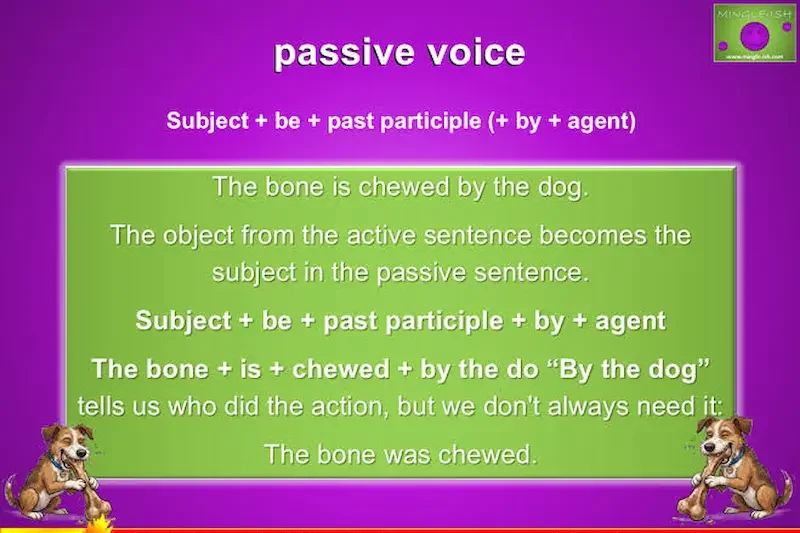
The most important rule is that the object of an active sentence usually becomes the subject of the passive sentence. The main verb changes to a suitable form of be + past participle (V3), and the original subject may be included in a phrase beginning with “by.”
Basic Sentence Structure
Active and passive voice follow different sentence patterns. Learning these patterns will help you identify and form sentences correctly.
Active voice structure:
Subject + Verb + Object
Example: The boy kicks the ball.
- Subject: The boy
- Verb: kicks
- Object: the ball
Passive voice structure:
Subject + Appropriate Form of “Be” + Past Participle (V3) + Optional “By” Phrase
Example: The ball is kicked by the boy.
- Subject: The ball
- Verb phrase: is kicked
- By phrase: by the boy
Notice that the object of the active sentence becomes the subject of the passive sentence. The main action remains the same, but the focus changes.
Here are more examples:
- Active: Sara reads a book.
- Passive: A book is read by Sara.
- Active: The teacher checked the homework.
- Passive: The homework was checked by the teacher.
- Active: They will announce the results.
- Passive: The results will be announced by them.
Remember that not every active sentence can be changed into passive voice naturally. Sentences without an object, such as “The baby sleeps,” generally cannot be converted into passive voice because there is no object to become the passive subject.
How to Change Active Voice Into Passive Voice
You can usually change an active sentence into passive voice by following these simple steps.
Step 1: Find the subject, verb, and object
Start by identifying who performs the action, the action itself, and the person or thing receiving it.
Example: The teacher teaches English.
- Subject: The teacher
- Verb: teaches
- Object: English
Step 2: Move the object to the beginning
The object of the active sentence usually becomes the subject of the passive sentence.
Active: The teacher teaches English.
Passive beginning: English …
Step 3: Use the correct form of “be”
Choose the form of be that matches the original tense and the new subject.
For the present simple tense, use am, is, or are as appropriate.
English is …
Step 4: Change the main verb to its past participle
Use the third form of the main verb (V3).
Teach → taught
The sentence now becomes: English is taught …
Step 5: Add “by” and the original subject if needed
You can include the original subject in a phrase beginning with “by.”
Final passive sentence: English is taught by the teacher.
Let’s look at another example:
Active: The workers repaired the road.
- Subject: The workers
- Verb: repaired
- Object: the road
- Passive subject: the road
- Correct past form of be: was
- Past participle: repaired
Passive: The road was repaired by the workers.
The same method works for many tenses, but the form of be must change to match the tense of the original sentence.
Rules for Using “By” in Passive Voice
In passive voice, by can introduce the person or thing that performs the action. However, you do not always need to include it.
Use “by” when the doer is important or when identifying the person responsible adds useful information.
Examples:
- The novel was written by a famous author.
- The match was won by our team.
- The picture was painted by my sister.
- The report was prepared by the manager.
In these examples, the person or group responsible for the action is worth mentioning.
You can omit “by” when the doer is unknown, obvious, or unimportant.
Examples:
- My bicycle was stolen.
- The road is being repaired.
- The documents have been signed. active and passive voice examples
- The building was constructed many years ago.
These sentences remain complete without naming the person who performed the action.
Important grammar tip: When a passive sentence includes a pronoun after “by,” use the correct object form.
- by me
- by him
- by her
- by us active and passive voice examples
- by them
For example, “The letter was written by him” is correct, while “The letter was written by he” is incorrect.
When to Use Active and Passive Voice
Both active and passive voice are useful, but the best choice depends on what you want to emphasize.
Use active voice when the doer is important.
Active voice makes it clear who performs the action. active and passive voice examples
Examples:
- The manager approved the plan.
- The doctor examined the patient.
- The students completed the assignment. active and passive voice examples
These sentences are direct and clearly identify the people performing the actions.
Use passive voice when the action or result is more important.
Passive voice allows you to focus on what happened rather than who did it.
Examples:
- The plan was approved.
- The patient was examined. active and passive voice examples
- The assignment was completed.
These sentences are useful when the person responsible is already known, not important, or not mentioned.
Use passive voice when the doer is unknown.
For example, “My bag was taken” is useful when you do not know who took the bag.
Use passive voice in formal or technical writing when appropriate.
Examples:
- The samples were tested in the laboratory.
- The data was collected during the study. active and passive voice examples
- The application was submitted before the deadline.
However, passive voice is not automatically better for formal writing. Active voice is often clearer and more concise. Choose the form that communicates your meaning most effectively. active and passive voice examples
By following these rules, you can change many active sentences into passive sentences and understand when each form is appropriate.
Active and Passive Voice Examples in All Tenses
One of the most important parts of learning active and passive voice is understanding how the verb changes in different tenses. The tense of the original sentence usually remains the same when you change it from active to passive voice, but the verb structure changes. active and passive voice examples
In passive voice, we use the appropriate form of be + the past participle (V3) of the main verb. The form of be depends on the tense.
Let’s explore active and passive voice examples in common English tenses. active and passive voice examples
Present Simple Tense
The present simple tense describes habits, routines, general facts, and repeated actions.
Active voice structure: Subject + base verb (or verb with s/es) + object
Passive voice structure: Object + am/is/are + past participle (V3)
Examples:
- Active: Ali writes a letter.
- Passive: A letter is written by Ali.
- Active: She cleans the room. active and passive voice examples
- Passive: The room is cleaned by her.
- Active: They play cricket.
- Passive: Cricket is played by them.
- Active: The teacher explains the lesson.
- Passive: The lesson is explained by the teacher.
- Active: People speak English in many countries.
- Passive: English is spoken in many countries. active and passive voice examples
Use am with I, is with singular subjects, and are with plural subjects in the passive form.
Present Continuous Tense
The present continuous tense describes an action that is happening now or around the present time.
Active voice structure: Subject + am/is/are + verb-ing + object
Passive voice structure: Object + am/is/are + being + past participle (V3)
Examples:
- Active: Ali is writing a letter.
- Passive: A letter is being written by Ali.
- Active: She is washing the clothes.
- Passive: The clothes are being washed by her.
- Active: They are repairing the road. active and passive voice examples
- Passive: The road is being repaired by them. active and passive voice examples
- Active: The teacher is checking the homework.
- Passive: The homework is being checked by the teacher.
- Active: The workers are painting the walls.
- Passive: The walls are being painted by the workers.
Remember that being is an important part of the passive structure in the present continuous tense.
Present Perfect Tense
The present perfect tense describes actions that have been completed or events connected to the present.
Active voice structure: Subject + has/have + past participle + object
Passive voice structure: Object + has/have + been + past participle (V3)
Examples:
- Active: Ali has completed the assignment.
- Passive: The assignment has been completed by Ali.
- Active: She has written a story.
- Passive: A story has been written by her.
- Active: They have cleaned the classroom. active and passive voice examples
- Passive: The classroom has been cleaned by them.
- Active: The manager has approved the plan.
- Passive: The plan has been approved by the ma active and passive voice examples.
- Active: Someone has stolen my bicycle.
- Passive: My bicycle has been stolen.
Use has been with singular subjects and have been with plural subjects and I/you/we/they, as appropriate.
Past Simple Tense
The past simple tense describes actions that happened and finished in the past.
Active voice structure: Subject + past-tense verb + object
Passive voice structure: Object + was/were + past participle (V3)
Examples:
- Active: Ali wrote a letter.
- Passive: A letter was written by Ali.
- Active: She cooked dinner. active and passive voice examples
- Passive: Dinner was cooked by her.
- Active: They won the match.
- Passive: The match was won by them.
- Active: The teacher checked the notebooks.
- Passive: The notebooks were checked by the teacher.
- Active: Someone broke the window. active and passive voice examples
- Passive: The window was broken.
Use was with singular subjects and were with plural subjects in the passive form.
Past Continuous Tense
The past continuous tense describes an action that was in progress at a particular time in the past.
Active voice structure: Subject + was/were + verb-ing + object active and passive voice examples
Passive voice structure: Object + was/were + being + past participle (V3)
Examples:
- Active: Ali was writing a letter.
- Passive: A letter was being written by Ali.
- Active: She was washing the dishes.
- Passive: The dishes were being washed by her. active and passive voice examples
- Active: They were repairing the road.
- Passive: The road was being repaired by them. active and passive voice examples
- Active: The teacher was explaining the lesson.
- Passive: The lesson was being explained by the teacher.
- Active: The workers were painting the house. active and passive voice examples
- Passive: The house was being painted by the workers.
The word being shows that the action was in progress at that time.
Past Perfect Tense
The past perfect tense describes an action that was completed before another past event or time. active and passive voice examples
Active voice structure: Subject + had + past participle + object
Passive voice structure: Object + had + been + past participle (V3)
Examples:
- Active: Ali had finished the work.
- Passive: The work had been finished by Ali.
- Active: She had prepared the meal.
- Passive: The meal had been prepared by her.
- Active: They had completed the project. active and passive voice examples
- Passive: The project had been completed by them.
- Active: The teacher had checked the papers.
- Passive: The papers had been checked by the teacher.
- Active: Someone had locked the door.
- Passive: The door had been locked. active and passive voice examples
Notice that had been is used for all subjects in the passive form of the past perfect tense.
Future Simple Tense
The future simple tense describes actions that will happen in the future.
Active voice structure: Subject + will + base verb + object active and passive voice examples
Passive voice structure: Object + will + be + past participle (V3)
Examples:
- Active: Ali will write a letter.
- Passive: A letter will be written by Ali.
- Active: She will complete the assignment.
- Passive: The assignment will be completed by her.
- Active: They will announce the results. active and passive voice examples
- Passive: The results will be announced by them.
- Active: The company will launch a new product.
- Passive: A new product will be launched by the company.
- Active: The workers will repair the road.
- Passive: The road will be repaired by the workers. active and passive voice examples
The important point is to use will be + past participle in the passive form.
Modal Verbs
Modal verbs include can, could, may, might, must, should, and would. They express ability, possibility, permission, obligation, or advice.
Active voice structure: Subject + modal verb + base verb + object active and passive voice examples
Passive voice structure: Object + modal verb + be + past participle (V3)
Examples:
- Active: Ali can solve the problem.
- Passive: The problem can be solved by Ali.
- Active: You should follow the rules.
- Passive: The rules should be followed by you.
- Active: They must complete the work.
- Passive: The work must be completed by them.
- Active: She may send the email.
- Passive: The email may be sent by her. active and passive voice examples
- Active: We can finish the project.
- Passive: The project can be finished by us. active and passive voice examples
- Active: The school might cancel the event.
- Passive: The event might be canceled by the school.
Remember the simple pattern: modal verb + be + past participle. For example, “must complete” changes to “must be completed.”
A Quick Note About Passive Voice Tenses
Not every tense or verb naturally forms a passive sentence. Passive voice generally requires a verb that takes an object, and some passive structures are uncommon or awkward in everyday English. active and passive voice examples
For most learners, it is best to focus first on the common patterns shown above: present simple, present continuous, present perfect, past simple, past continuous, past perfect, future simple, and modal verbs. Practicing these examples will help you understand how active and passive voice work in different situations. active and passive voice examples
Active and Passive Voice Examples in Questions and Negative Sentences
Active and passive voice can be used in questions and negative sentences, just like in ordinary statements. However, the sentence structure may change when you convert a question or a negative sentence from active voice to passive voice. Understanding these patterns will help you use English grammar more correctly. active and passive voice examples
Active and Passive Voice Examples in Interrogative Sentences
An interrogative sentence is a sentence that asks a question. When changing an active voice question into passive voice, keep the question format and use the correct form of the verb “to be” with the past participle of the main verb. active and passive voice examples
Here are some easy examples of active and passive voice questions.
Examples:
- Active: Does Ali write a letter?
- Passive: Is a letter written by Ali? active and passive voice examples
- Active: Did Sara complete the homework?
- Passive: Was the homework completed by Sara?
- Active: Is the teacher checking the papers?
- Passive: Are the papers being checked by the teacher?
- Active: Has Ahmed finished the work? active and passive voice examples
- Passive: Has the work been finished by Ahmed?
- Active: Will they announce the results?
- Passive: Will the results be announced by them?
Remember: In questions, the helping verb usually comes before the subject. Always use the correct helping verb according to the tense.
Active and Passive Voice Examples in Negative Sentences
A negative sentence expresses that something does not happen, did not happen, or has not happened. To change a negative sentence into passive voice, keep the negative word, such as “not,” and use the appropriate passive structure.
Examples:
- Active: Ali does not clean the room.
- Passive: The room is not cleaned by Ali.
- Active: Sara did not write the letter. active and passive voice examples
- Passive: The letter was not written by Sara.
- Active: They are not watching the movie.
- Passive: The movie is not being watched by them.
- Active: He has not completed the assignment.
- Passive: The assignment has not been completed by him.
- Active: The manager will not approve the request.
- Passive: The request will not be approved by the manager.
The main rule is simple: keep “not” in the sentence and change the verb structure according to the tense. Also, make sure the new subject agrees with the helping verb.
Active and Passive Voice Examples in Imperative Sentences
An imperative sentence gives an order, instruction, request, or advice. These sentences often begin with the base form of a verb, and the subject “you” is usually understood rather than written.
Imperative sentences can sometimes be changed into passive voice by using structures such as “Let + object + be + past participle.” However, this form may sound formal, so everyday English often uses a more natural alternative.
Examples:
- Active: Open the door.
- Passive: Let the door be opened.
- Active: Complete the assignment. active and passive voice examples
- Passive: Let the assignment be completed.
- Active: Do not touch the switch.
- Passive: Let the switch not be touched.
- Active: Follow the instructions.
- Passive: Let the instructions be followed.
- Active: Please submit the form.
- Passive: You are requested to submit the form.
Notice that the last example uses a natural passive-style request rather than a direct word-for-word conversion.
Important Tips for Changing Questions and Negative Sentences
When converting questions and negative sentences between active and passive voice, remember these points:
- Keep the original meaning of the sentence.
- Use the correct tense and form of the helping verb.
- Place the helping verb before the subject in questions.
- Keep “not” in negative sentences.
- Use the past participle of the main verb in passive voice.
- Include “by” followed by the doer only when it adds useful information. active and passive voice examples
With regular practice, these rules become easier to understand and apply in everyday English.
What is the difference between active and passive voice?
In active voice, the subject performs the action. In passive voice, the subject receives the action. For example, “Ali writes a letter” is active voice, while “A letter is written by Ali” is passive voice.
What are some examples of active and passive voice?
An active voice example is “Sara cooks food.” Its passive form is “Food is cooked by Sara.” Another example is “The teacher checked the papers,” which becomes “The papers were checked by the teacher.”
How do you change active voice into passive voice?
To change active voice into passive voice, make the object of the active sentence the subject of the passive sentence. Then use the correct form of “be” with the past participle of the main verb. Add “by” and the original subject when necessary.
conclusion
Learning active and passive voice examples can help you improve your English grammar, writing, and communication skills. Active voice focuses on the person or thing performing an action, while passive voice focuses on the person or thing receiving it.
To change active voice into passive voice, identify the subject, verb, and object, then use the correct form of “be” with the past participle of the main verb. Remember to follow the tense rules and keep negative words and question structures correct.
Practice with simple sentences before moving on to more complex examples. With regular practice, you will become more confident in identifying and using active and passive voice in schoolwork, everyday conversations, and professional writing.